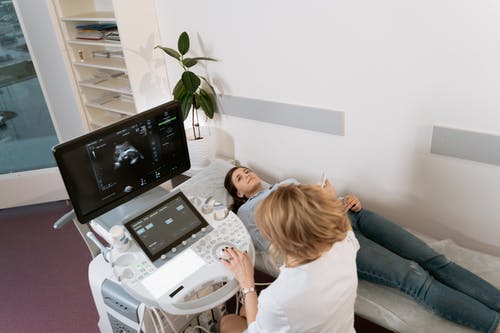
Learning to use an ultrasound machine can feel overwhelming at first. Between all the buttons, image settings, and terminology, it’s easy to wonder where to start. But with the right mindset and foundational knowledge, you’ll quickly find that ultrasound becomes one of the most intuitive—and rewarding—tools in your clinical toolkit.
At Ultrasound Trainings, we specialize in helping providers from all backgrounds—midwives, physicians, nurses, nurse practitioners, and physician assistants—gain hands-on confidence with ultrasound. Whether you’re brand-new to scanning or looking to refine your skills, the key is building comfort with both the technology and the technique.
Step 1: Get to Know Your Equipment
Every ultrasound machine has unique features, but the core components are the same:
- Transducer (probe): The handheld device that sends and receives sound waves.
- Control panel: Adjusts settings like depth, gain, and focus.
- Display screen: Where the image is generated and interpreted.
Spend time exploring your system when you’re not scanning a patient. Practice turning it on, adjusting the image, and identifying basic controls such as:
- Depth: Controls how deep into the tissue you’re viewing.
- Gain: Adjusts image brightness and contrast.
- Freeze: Stops the image to allow measurements.
- Cine loop: Rewinds several seconds of a live scan.
Getting comfortable with these controls early will help you focus on what matters most—the image and your patient—during real-time scans.
Step 2: Choose the Right Transducer
Selecting the correct probe is essential for clear, accurate imaging:
- Curved (convex) probe: Used for abdominal and obstetric scans.
- Linear probe: Used for vascular, musculoskeletal, or superficial structures.
- Endocavitary probe: Used for early pregnancy or pelvic exams.
At Ultrasound Trainings, our instructors teach hands-on probe selection, positioning, and care—so you can confidently transition between applications in practice.
Step 3: Master Your Scanning Technique
Proper technique is key to producing diagnostic-quality images. Focus on:
- Patient positioning: Align your patient comfortably and expose only the necessary area.
- Probe orientation: Always keep the indicator facing the correct direction (usually toward the patient’s head or right side).
- Steady hand movement: Avoid sliding too quickly—make small, deliberate motions.
- Image optimization: Use gain, depth, and focus to fine-tune what you see.
As you practice, try scanning normal anatomy first. This builds your mental “image library” and helps you recognize what’s normal before identifying what’s not.
Step 4: Practice, Pause, and Reflect
Ultrasound proficiency comes with repetition. Practice daily if possible—whether on models, phantoms, or patients (within your scope of training). After each session, review your images:
- Was your depth appropriate?
- Could your image be clearer with a gain adjustment?
- Did your probe orientation match the anatomical view you expected?
Learning from every scan accelerates your progress far more than reading alone.
Step 5: Stay Curious and Keep Learning
Ultrasound technology evolves constantly, and ongoing education helps you stay current and confident. Continuing education and skills refreshers are essential—even for experienced providers.
Ultrasound Trainings offers structured learning pathways that combine didactic teaching with supervised scanning. Our programs cover:
- Image acquisition and optimization
- Anatomy recognition
- Safety and infection control
- Documentation and interpretation
- Real-world case studies and simulations
Confidence Comes With Practice and Support
The journey to becoming proficient in ultrasound starts with curiosity and persistence. Every provider begins as a beginner—and with time, practice, and expert guidance, it becomes second nature.
At Ultrasound Trainings, our mission is to help you build not just technical ability, but clinical confidence—so you can integrate ultrasound smoothly and safely into your daily patient care.
Ready to take the next step?
Join one of our Introductory Ultrasound Trainings courses and learn from experienced instructors who make ultrasound approachable, practical, and empowering.